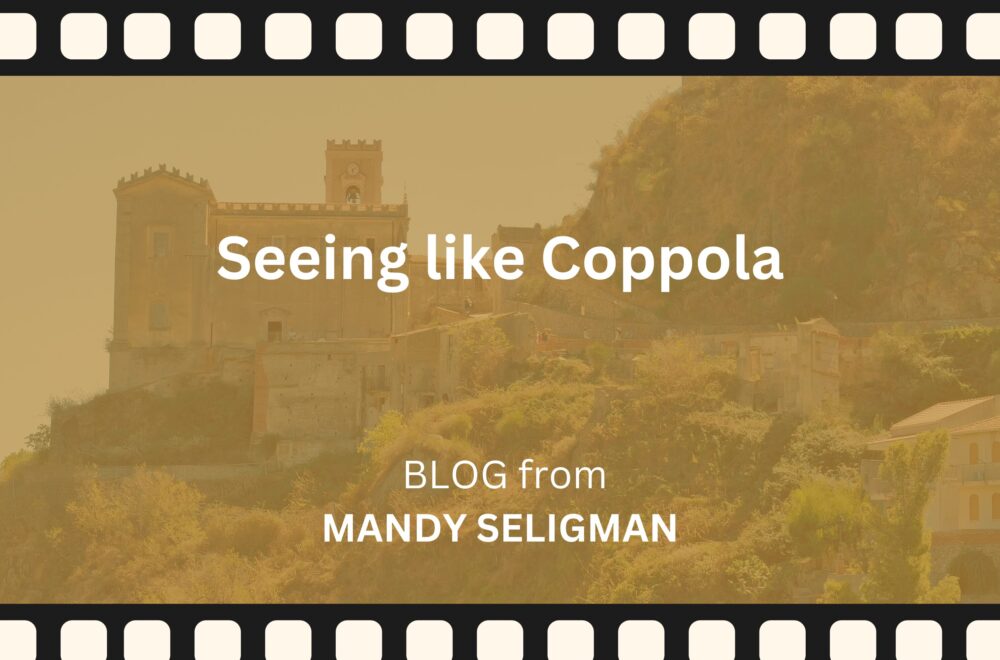
Written September 21st, 2025
This month, I walked through a dream and a movie.
Some places feel like they’ve lived many lives, a quiet hilltop town in Sicily, is one of them. For most of the world, it’s a speck on the map. For me, it’s sacred ground.
It’s the town where The Godfather, my favorite movie of all time, came to life.
Dear SeeingHappy friends,
I walked those same paths, from the stone steps of San Nicolò Church, where Michael Corleone marries Apollonia, to the sun-drenched piazza where they dance under the Sicilian sky. But I wasn’t just walking through a movie set – I was walking through a vision.
Because before it was a legend, Savoca was just an old forgotten village. And The Godfather was just a script no one believed in.
Coppola Saw Beauty First
Francis Ford Coppola had almost no money, no clout, and very little support. The studio didn’t trust him. He was too young. Too Italian. Too poetic.
But he saw something no one else could see.
He came to Sicily, looked up at this dusty, crumbling village, and knew it could hold the soul of the story. He didn’t choose the obvious filming locations. He chose truth. He chose light and shadow. He chose emotion.
And that’s the part that stirs me most: he used what he had – vision, instinct, faith – and transformed an ordinary place into one of the most iconic and emotionally resonant films of all time.
Walking through Savoca, I carried my camera, but also a sense of reverence. Not just for the film, but for Coppola’s act of seeing.
Photography Is Also That Kind of Vision
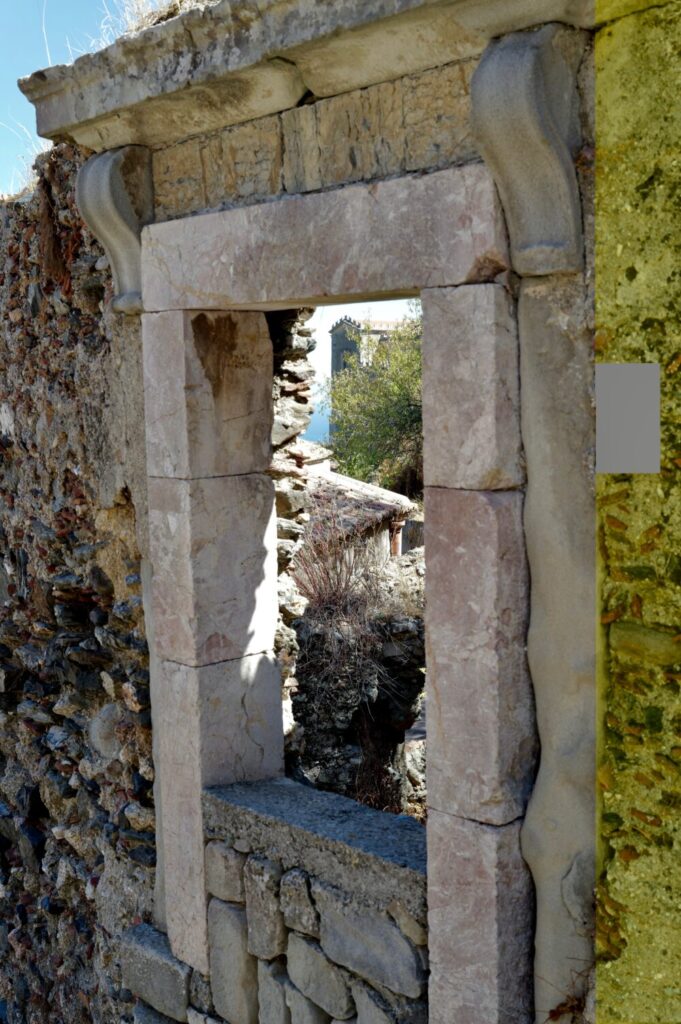
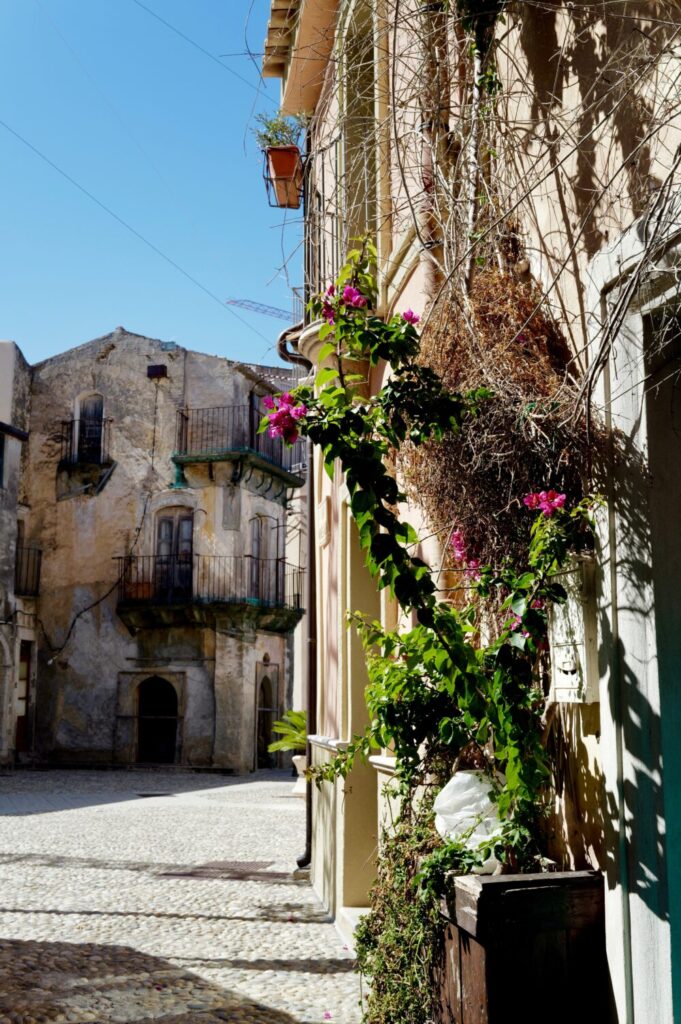
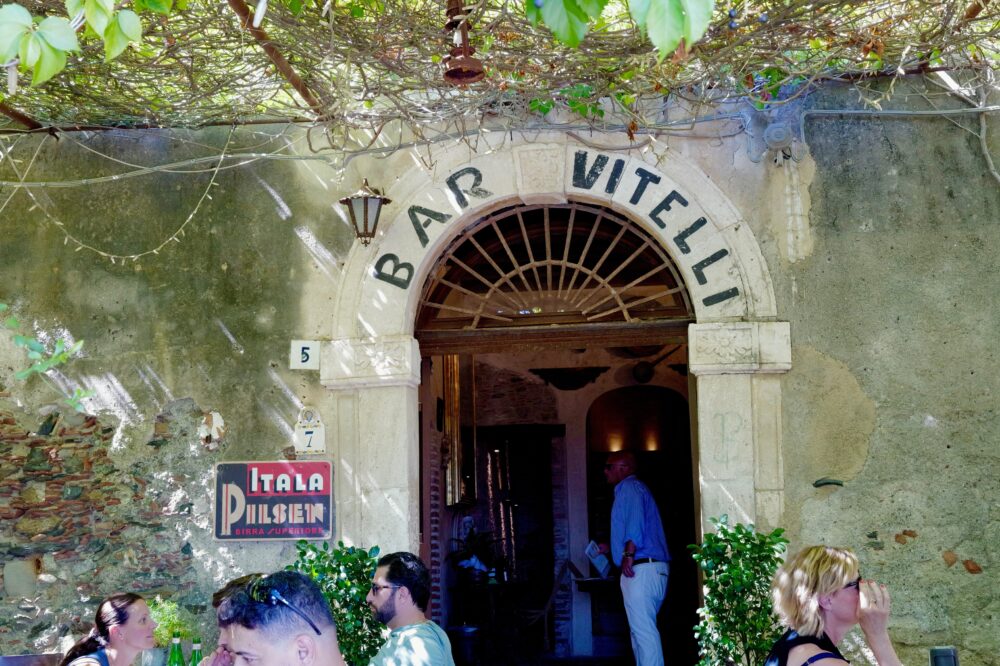
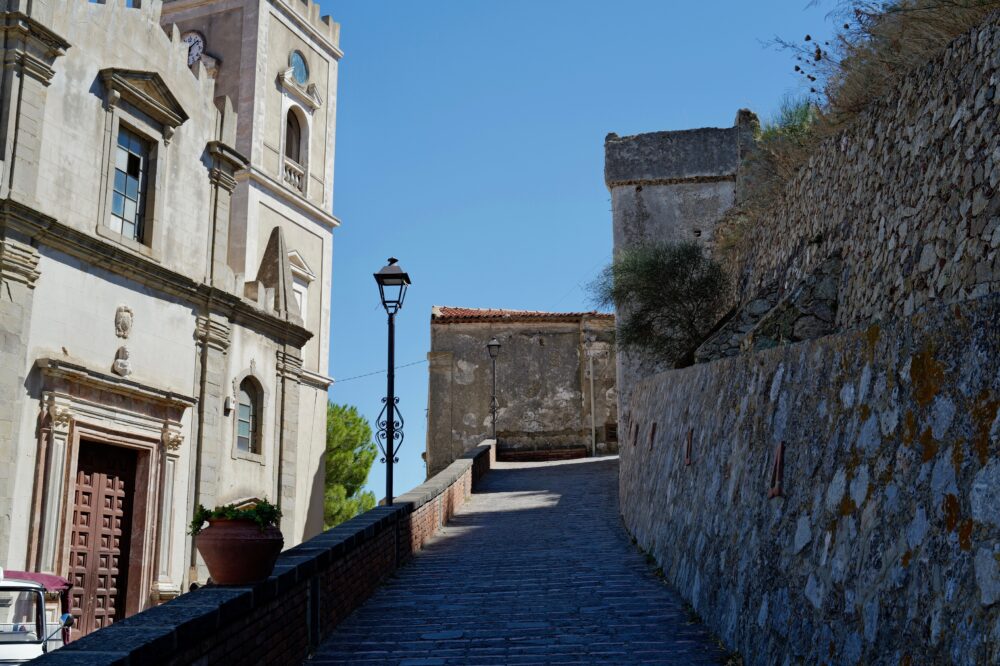
A photo walk isn’t just about taking pictures. It’s about seeing the way an artist sees – through time, through surface, into essence. I took my time, walking slowly from the church, past Bar Vitelli, and down to the square. I stopped often. The light was different around every corner. It was softer, warmer, like it too had aged into something cinematic.
The stone walls are cracked now. The tourists come and go.
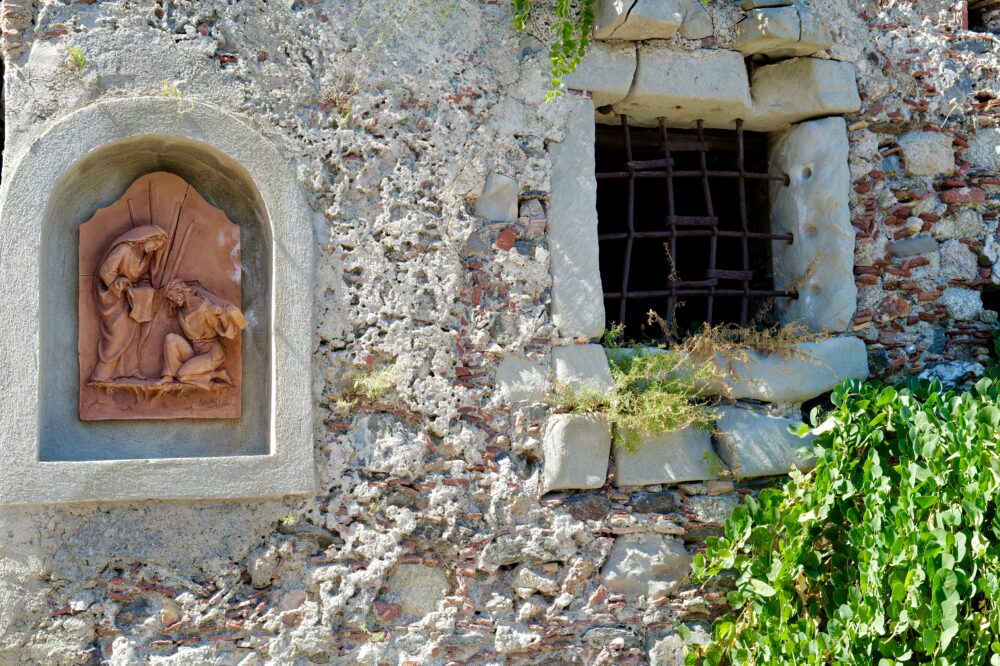
But the beauty remains – not because it was placed there, but because someone once believed it was worth seeing.
Photography invites us to do the same. To notice what’s already there. To honor it. To reveal its beauty by the very act of paying attention.
Walking in Someone Else’s Vision—and Then Finding Your Own
As I walked, I thought about how art begins: in doubt, in silence, in risk. Coppola risked everything. He took what was broken – both in the story and in the landscape – and made something immortal.
That’s the spiritual power of seeing.
We don’t always get to choose our circumstances. But we can choose to see them differently. We can choose beauty. We can choose to frame things in a way that gives meaning. That is the heart of SeeingHappy – not ignoring suffering, but noticing what else is also true: joy, connection, resilience, light.
Try Your Own Vision Walk
You don’t have to be in Sicily. You don’t need Coppola’s camera. But you do need your eyes and your courage.
Things to Try
- Go somewhere familiar but look at it as if it were a film set.
- What’s the story here?
- What’s the light doing?
- Where is the beauty hiding?
And then, take a photo. Not for Instagram, but for yourself. As proof that you saw.
From Ordinary to Iconic
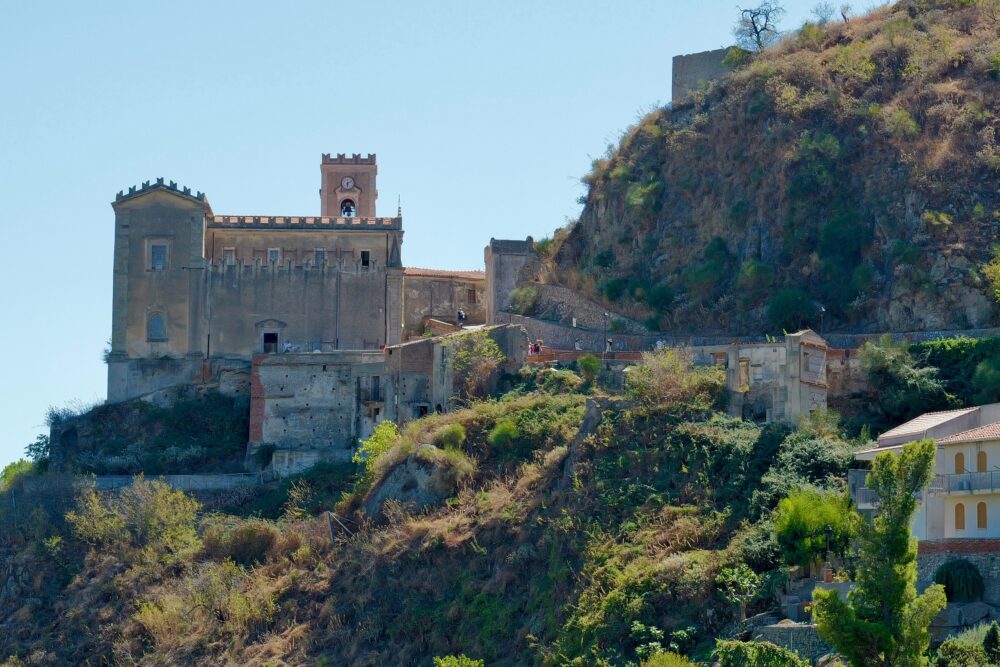
Savoca taught me something I’ll never forget: every place holds stories. Every moment holds beauty. But it takes vision to bring it forward.
Coppola had that vision. Photography helps us find our own.
What are you looking at? What could you transform just by choosing to see it differently?
Take the walk. Bring your camera. Follow the light.
And remember: the genius isn’t in the lens. It’s in the eyes behind it.
Thank you for walking with me,
-Mandy
P.S. Have a favorite Godfather scene? Or a photo walk story of your own? Reply and share it. I’d love to see what you’re seeing.
This newsletter was partially edited using ChatGPT-5.